Financial Services Sector

Overview of the Sector

The financial services and insurance sector encompasses the management of and brokerage in financial assets, risk mitigation, and the provision of specialized financial services, in addition to activities carried out by insurance companies to protect individuals or entities from financial losses. These financial assets belong to savers, investors, and borrowers—both individuals and institutions—as well as entities seeking risk management solutions. The sector also includes securities trading, advisory services, support activities, and administrative services.

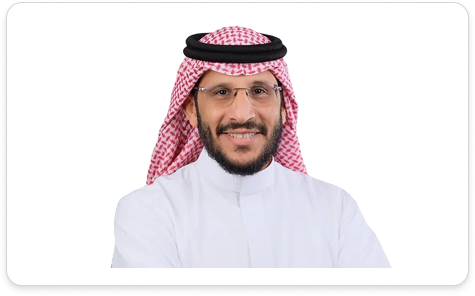
Mr. Abdullah Al-Salamah

Head of the Human Capital Division
“We seek to develop a workforce with world-class skills capable of adapting to rapid changes in the financial and insurance sectors, with a focus on innovation and fintech to enhance efficiency and competitiveness. We will utilize the sectoral skills framework as a tool to design targeted training solutions that support growth and development strategies.”

Members

Mr. Ahmad Ababtain
President of the Academy
Mr. Khalid Al-Saqr
Vice President of the Academy
Ms. Rima Siyam
Head of the Learning and Talent Development Department
Ms. Nuha Qarqash
Director of Talent Management
A. Daoud Al-Fareeh
Head of Human Resources
Mr. Abdullah Hamad Al-Saqir
Director General of Human Capital and Administrative Affairs
Mr. Adnan al-Somali
Head of Human Capital
Mr. Yasser Al-Shaalan
Director of Talent Management
Mr. Thamer Al-Issa
Financial Expert
Mr. Sultan Al-Rashidi
Executive Director of Business Development
Mr. Abdullah Al-Mana'
Representative of the National Committee of Workers' Committees
Ms. Khulud Al-Ghatti
President of the Public Investment Fund Academy
Mr. Bassam Al-Harbi
Human Resources Manager
Mr. Ibrahim Al-Abdulkarim
Director of the Registration Unit
Mr. Ali Al-Hudhaif
Assistant Director General for Organizational Excellence in Human Resources
A. Makki al-Qasir
Head of the Administrative and Financial Affairs Department
Mr. Khalid Batal Al-Batal
Head of Human Capital and Institutional Support at SIMAH
Mr. Muhammad al-Hamzani
Financial Expert

Sectoral Skills Framework

 A sectoral skills framework serves as a comprehensive tool for identifying the skills required in a sector; it specifies the skills needed for each job family within the sector’s value chains. The sectoral skills framework follows a systematic approach to identifying the skills required in the sector: first, job groups were identified within the subsectors, followed by the identification of key job roles, career paths, and priority skills. 
Develop an overview of the sector and its subsectors, the major trends in the sector, and the skills required in line with those trends, in addition to identifying job categories and career paths in the financial services and insurance sector.
Provide details on the technical and soft skills associated with the main job categories in the financial services and insurance sector in the Kingdom.
The Excel tool serves as a supplement to the Financial Services and Insurance Sector Skills Dictionary report and the Introduction to the Financial Services and Insurance Sector Skills Framework. The tool focuses on two main types of skills: general skills and technical skills.

Professional Standards Framework

National documents outlining standards for the description of occupations and their associated jobs, including the knowledge, skills, requirements, and competencies necessary to perform job roles and tasks. This includes the application and use of these standards in various contexts depending on the users, such as human resources professionals, training centers, and others interested in human capacity building.

Partnerships

Strategic partnerships for sectoral skills councils are a fundamental pillar for helping to meet the evolving needs of the labor market, Integration between the public and private sectors and training and educational institutions is one of the cornerstones of the sectoral skills councils’ work; it helps bridge the skills gap between supply and demand, improves the quality of educational and training outcomes, and enhances the efficiency of human capital as the primary driver of national development.
The Financial Academy
Tajseer Association

Training Programs

Programs that have been aligned with the skills framework to ensure that learning and training outcomes are consistent with the technical and general skills identified by the sectoral skills councils and included in the sectoral skills frameworks.